Event planning is all about creating an impactful experience for all attendees, but in 2026, attendees expect more than just good food and a well-decorated venue. Whether you are hosting a professional conference, an exhibition, or a product launch, attendee expectations in every event are going up with technological advancements. They search for purpose, connection, and comfort.
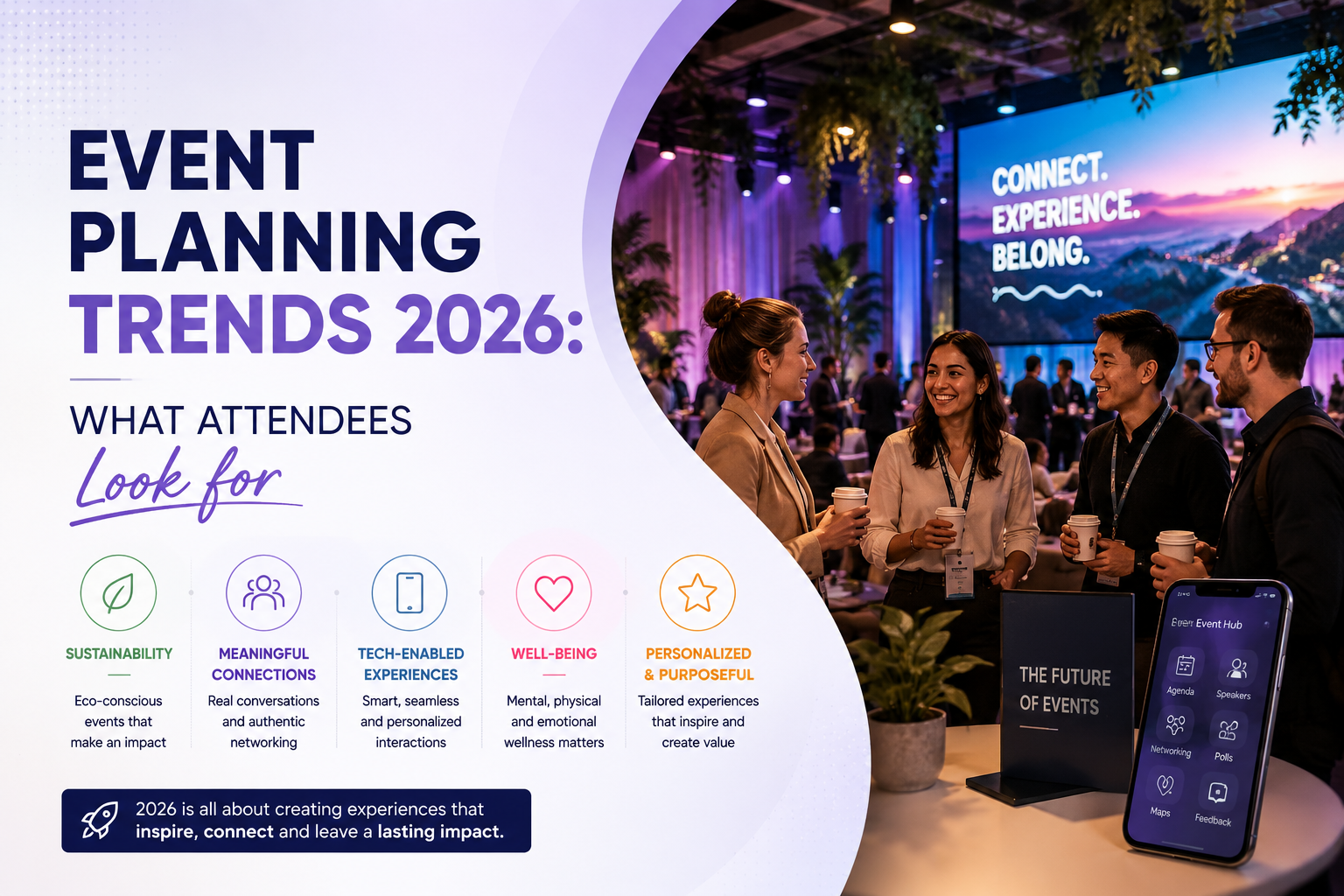
If you want to fulfill these expectations, you need to be aware of the latest event planning trends in 2026. In this article, we have prepared a detailed checklist for the hottest event planning trends of the year.
Let us explore them all.
Event Planning Trends 2026
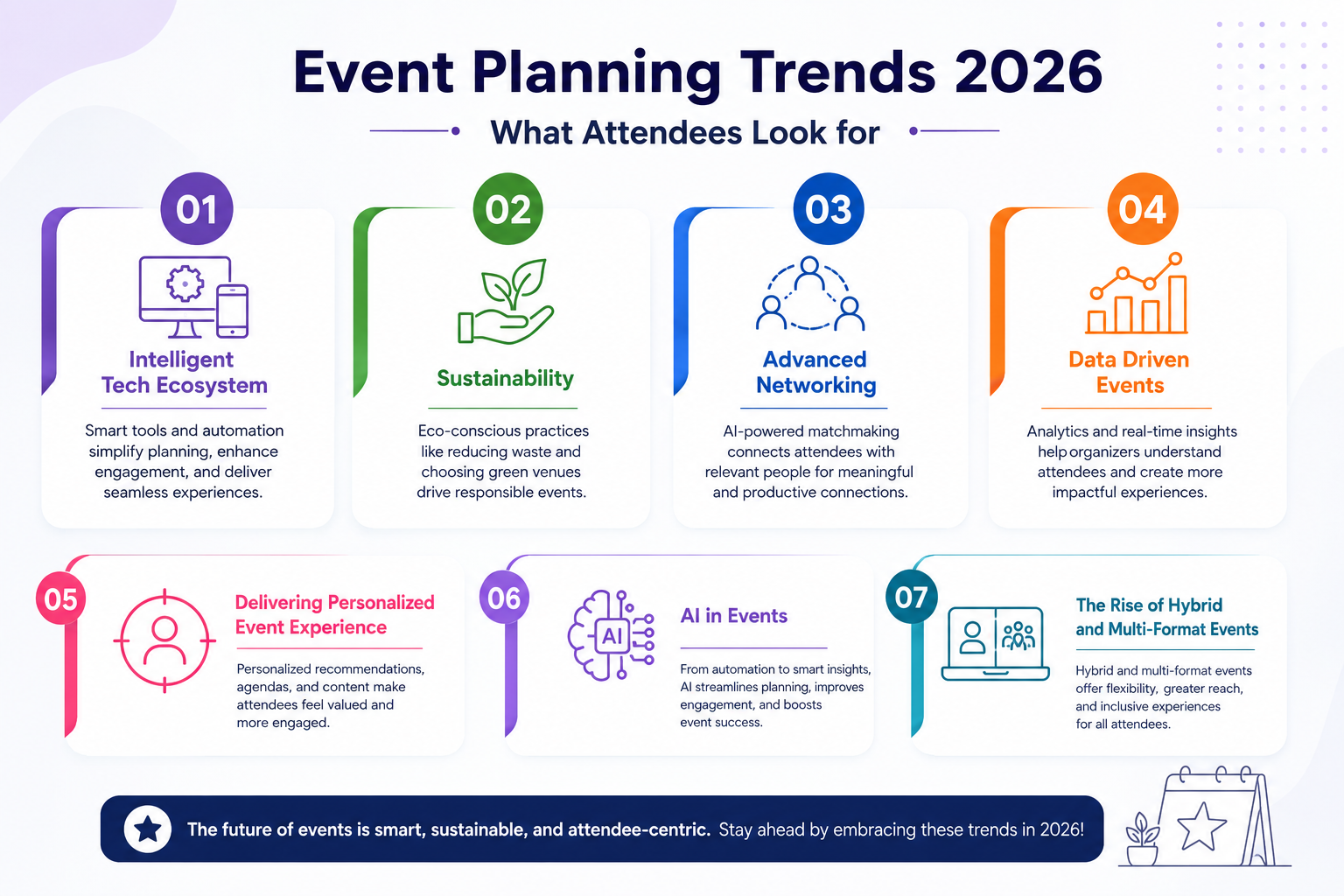
1. Intelligent Tech Ecosystem
Technology has become an inseparable part of modern event planning in 2026. Event planners today rely on technology instead of manual operations. Gone are those days when organizers used to spend sleepless nights managing registrations, ticket sales, and attendee data in bulk.
The year 2026 witnesses the use of tools that simplify event management while enhancing attendee experiences. From event registration and ticketing to attendee engagement and post-event analysis, organizers are adopting event technology to simplify the entire process .
A tech-driven event ecosystem allows event organizers to automate repetitive tasks, centralize event data, improve engagement, and deliver seamless experiences across multiple touchpoints. It also helps teams make informed decisions by providing real-time insights into attendee behavior and event performance.
Solutions like WP Event Manager enable organizers to build and manage events efficiently through features such as event listings, registrations, attendee management, virtual event support, marketing integrations, networking tools, and detailed analytics.
2. Sustainability
With the growing environmental awareness among people, the concept of sustainability is no longer considered a trend. It has become a necessity for every event. In fact, it has become a decision-making factor for attendees, stakeholders, and sponsors.
Some of the sustainable event practices include:
- Reducing paper usage.
- Minimizing waste
- Choosing an eco-friendly venue.
- Virtual events
- Reducing water wastage
- Waste management.
A well-executed sustainability strategy not only benefits the environment but also strengthens brand reputation and attracts environmentally conscious attendees.
If you want to build more environmentally responsible events, check out our detailed guide on Sustainable Event Management, which covers practical strategies and best practices for reducing the environmental impact of your events.
3. Advanced Networking
Networking has always been one of the main reasons people attend events. However, traditional networking methods are no longer effective for modern attendees.
In 2026, attendees do not want to get into any random conversation to waste time. They look for meaningful, relevant, and personalized connections.
This is where advanced networking technology comes into play. Modern event platforms are leveraging Artificial Intelligence to connect attendees based on shared interests, professional goals, industry expertise, and behavioral data.
Considering this requirement, WP Event Manager has developed an AI-powered matchmaking feature that helps participants identify the most valuable connections before an event. Instead of spending hours searching for relevant contacts, attendees receive intelligent recommendations that maximize networking opportunities.
Advanced networking tools also support meeting scheduling, messaging, profile matching, and real-time engagement, creating a more productive and enjoyable event experience. AI scrutinizes all attendee profiles and analyzes them to suggest relevant matches. This saves time for event participants and connects them with the right people.
4. Data driven events
Data is becoming one of the most valuable assets in modern event planning.
Successful event organizers are increasingly relying on data analytics to understand attendee behavior, optimize event performance, and make smarter business decisions.
By analyzing registration patterns, engagement metrics, session attendance, networking activity, and attendee feedback, organizers can identify what works and what needs improvement.
Data-driven event planning helps organizers:
- Understand attendee preferences
- Improve marketing performance
- Optimize event scheduling
- Increase engagement rates
- Measure return on investment
- Enhance future event experiences
Rather than relying on assumptions, event professionals can use actionable insights to create more targeted and successful events.
To learn how analytics can transform your event strategy, explore our comprehensive guide on Data Driven Event Planning and discover how data can help you deliver measurable event success.
5. Delivering Personalized Event Experience
Personalization is a part of data driven event planning. It is only possible with relevant attendee data.
Modern event participants expect experiences tailored to their interests, preferences, and professional goals. Generic event experiences are no longer enough to keep attendees engaged.
Personalization can be implemented throughout the attendee journey, including:
- Customized event recommendations
- Personalized agendas
- Targeted content delivery
- AI-powered networking suggestions
- Tailored email communications
- Customized attendee dashboards
When attendees feel that an event has been designed specifically for them, they are more likely to engage, participate, and return for future events.
Advancements in event technology and analytics are making personalization easier than ever. Organizers can now leverage attendee data to create highly relevant experiences at scale.
Our Event Personalization Guide provides practical insights into creating attendee-centric experiences that boost engagement and event success.
6. AI in Events
Artificial Intelligence is rapidly transforming the event industry and is expected to play an even bigger role in 2026.
AI is helping event planners automate routine tasks, improve decision-making, enhance attendee engagement, and create more efficient event workflows.
Today, AI can assist with:
- Event content creation
- Marketing campaign optimization
- Attendee matchmaking
- Customer support through chatbots
- Predictive analytics
- Audience segmentation
- Personalized recommendations
- Event performance forecasting
By reducing manual workloads and providing valuable insights, AI allows event professionals to focus more on strategy, creativity, and attendee satisfaction.
Organizations that successfully integrate AI into their event planning processes will gain a significant competitive advantage in the years ahead.
For a deeper look at how AI is reshaping event management, explore our guide on AI Tools for Event Planners.
7. The Rise of Hybrid and Multi-Format Events
The popularity of hybrid events continues to grow as organizers seek to maximize accessibility and audience reach.
Attendees increasingly want the flexibility to choose how they participate. Some prefer in-person experiences, while others value the convenience of joining virtually.
Hybrid and multi-format events combine the best of both worlds by offering:
- Greater audience reach
- Increased event accessibility
- Higher engagement opportunities
- Improved sponsor visibility
- Enhanced content distribution
- Better attendee flexibility
These event formats also provide valuable resilience against unexpected disruptions while creating opportunities for year-round engagement.
As technology continues to improve, the distinction between virtual and in-person participation is becoming increasingly seamless. The result is a more inclusive event experience that accommodates diverse attendee needs.
If you’re planning to embrace hybrid event strategies, our guide to WordPress Hybrid Events provides valuable insights into creating successful hybrid experiences using modern event technology.
Wrapping up
We hope that this article will introduce you to the latest event planning trends. All you need to do is to use the right technology, embrace sustainable event practices, adopt AI in events, improve networking with AI matchmaking, deliver personalized experiences, create data driven events, and deliver personalized event experiences. Following these steps will help you fulfill your attendee expectations and offer what they are looking for.
The post Event Planning Trends 2026: What Attendees Look for appeared first on WP Event Manager.





0 Commentaires