Measuring your event success is crucial for your growth and to determine if the purpose of organizing the event is successful. As the event industry is highly competitive, event organizers need valid proof of their event performance in measurable form. When it comes to checking an event performance, certain factors are taken into consideration which include engagement level, networking opportunities, ticket sales, registrations and more.
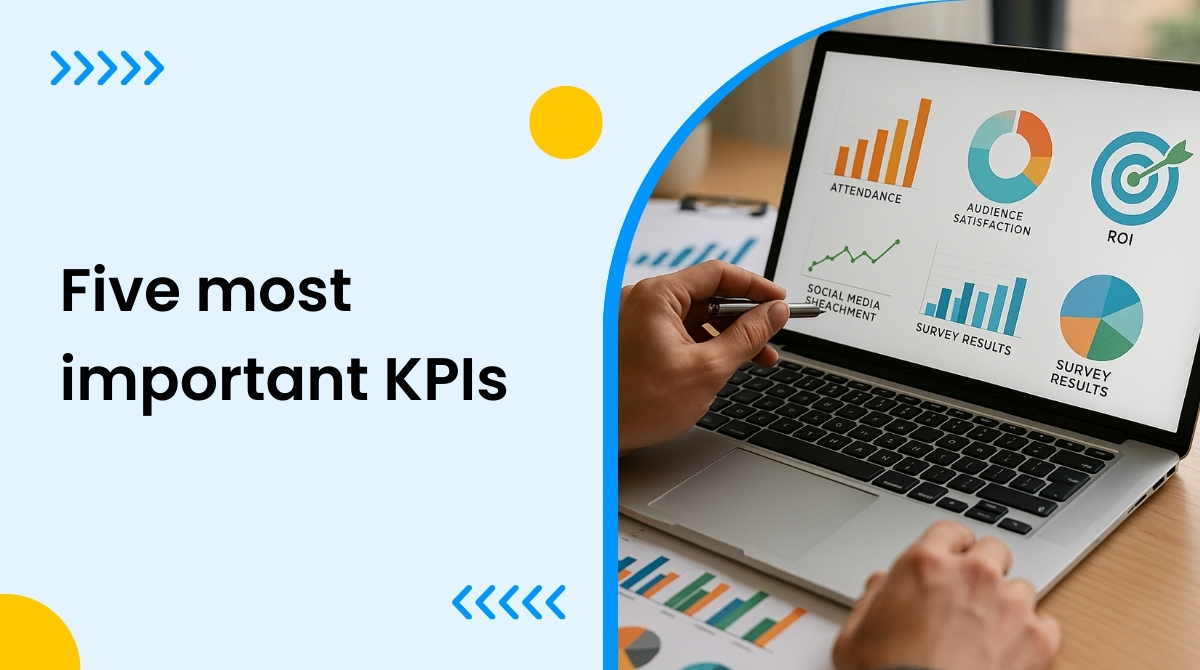
One of the most trusted ways of evaluating an event’s success is the key performance indicators (KPIs). However, not all KPIs are suitable for all events. Which KPIs are suitable for which event depends on the event strategy, objective, format and target audiences.
So how to measure event successs? What are the most important KPIs for all events? Read this article thoroughly to find out the answer.
Why event KPIs are important?
Event KPIs are extremely important to determine the success of your event as they convert abstract goals of an event into measurable outcomes.
Here is why event KPIs are so important:
- Shows measurable results: Event KPIs show a clear picture of your event performance which includes its ROI, engagement rate, attendance, brand awareness and more.
- Guides event analysis: With KPIs event organizers easily understands which idea or content worked or which did not for his or her event and analyse the performance deeply on the basis of that to make data driven decisions.
- Shows ROI: KPIs help event organizers determine the return on investment. The best part is it shows both financial and non-financial aspects, by linking event efforts to tangible results.
- Demonstrates Impact: With KPIs event organizers can show the ,money, time and efforts spent on an event to sponsors, partners etc to communicate value,
Now that you know about the importance of KPIs to measure event success, let us find out the ways to measure event success through event KPIs.
5 most important event KPIs to measure event success
1. Event KPIs to measure engagement and attendee experience
KPIs to measure event engagement and attendee experience help you understand if the event content reflected your audience interests. It also gives you an idea about where you need improvements.
Track the following areas of your event find out about attendee experience and engagement level:
- Registrations Vs event check-ins: Compare the number of registrations you received with the number of attendees to find out the conversion rate. A significant amount of difference indicates the importance of improvements.
- Attendee feedback: Run surveys before, during and after an event to get useful insights from attendees and take steps accordingly.
- Monitor dwell time per session: Track how long attendees stay at a specific booth. It shows if the event was successful in fulfilling attendee expectations.
- Net Promoter Score (NPS): NPS shows loyalty. A good NPS means your event offers value to your attendees.
- Check networking: Keep an eye on the engagement level in the networking areas including chats, event apps etc to see how much your event is succesful in building connections.
- Speaker engagement: carefully observe your speaker session views,ratings, feedback, polls and interactions.
besides this, keep an eye on the most engaging session, people’s reaction.
2. Brand awareness KPIs
Brand awareness KPIs helps measure how much your event is successful in spreading brand awareness. These metrics include:
- Registrations and attendance: Track the growth of the number of registrations and attendees in your entire event clycle to understand the relevance and interest.
- Event format and ticket type: whether you are organizing a hybrid or in-person event, check which type of event sells the maximum number of tickets or which type of event is mostly preferred by your audiences.
- Social media engagement: Monitor the number of mentions your receive on social media platforms, check comments, frequency of using signature hashtags and shares to measure social media engagement.
- Media coversage: Just like social media platforms, count the number of articles, blogs and more that have your event mentions.
3. KPI to measure revenue and financial performance
The revenue and financial performance helps you understand the difference between your event cost and revenue. Here are the areas you need to check:
- Check profitability: Compare the event revenue with event expenses to see it you are in profit or loss.
- Event ROI: Find out your event ROI by dividing the net value by total cost. It accurately shows the impact of your event.
- Monitor revenues from different campaigns: Check which marketing channel or campaign is the main source of your event revenue.
- Cost per customer acquisition: it is mostly suitable for product based companies in which cost per customer acuition is directly related to business growth.
4. Sponsorship and Partnership KPIs
There are various companies that depend on sponsorships to cover a major part of their event expenses. So tracking the sponsorship results becomes crucial for them for long lasting partnerships.
Here are the ways to measure sponsorship KPIs:
- Sponsor experience: Seek feedback from your sponsors with surveys to understand the level of sponsor satisfaction.
- Sponsor retention rate: Track how many sponsors are coming back to you to understand if your event sponsorship is adding value to their brand.
- Partnership influence: Count how many leads are generated by your partners through the event sponsorship.
5. Sales and pipeline KPIs
Events play a major role in creating potential business opportunities or sales pipeline. Here the sales KPIs show the influence of your event in the sales funnel.
- Attendee retention: The number of attendees returning to your event not only proves their loyalty but also the fact that your event is adding value to them.
- Qualified leads: Communicate the criteria for quality leads to your sales teams to make it easy for them to measure how many quality leads are generated in the event.
- Business and revenue opportunities: Calculate how many new leads or opportunities are created and how many existing leads’ purchasing decisions are influenced by your event
The above mention KPIs are the right KPIs that help you measure the success of your events. Make sure you calculate them to get the most accurate results for your event.
Protip: Use a WordPress event management plugin like WP Event Manager that simplifies the KPI measuring process for your events as the event management tools it offers clearly shows event registration, ticket sales and engagement reports for better event performance analysis.
Wrapping up
To conclude, we could say that the 5 most important event KPIs include event engagement and attendee experience, brand awareness, event revenue and financial performance, sponsorships and partnerships, and finally sales and pipeline. They not only help you understand the impact of your event on business growth but also show the value of your event to sponsors and stakeholders.
The post How to Measure Event Success?: 5 Most Important KPIs appeared first on WP Event Manager.


0 Commentaires