The year 2026 is all about digital transformation and AI intervention in almost every industry, including events. Events are no longer planned on the basis of assumptions; today’s event planners rely on data. Every click, comment, and interaction is monitored to get the accurate data. The concept of data driven event planning has simply redefined the way events are planned and organized.
This data mainly covers attendee information, registration numbers, ticket sales, event attendance, social media engagement, etc. Tracking each of them might feel overwhelming for event planners, but it can be easily done using the right tools.
In this article, you will learn about the concept of data-driven event planning, its importance, and how you can adopt the new trend with the help of the right technology.
What is data driven event planning?
Data driven event planning is the method of using insightful data and analytics to make every event decision from strategy to execution. It is the modern way of event planning that depends on real data instead of guesswork or assumption.
To run a data-driven event, you need to track the following data:
- Number of event registrations and ticket sales.
- Level of engagement.
- Attendee behavior.
- Session views.
- Attendee feedback
These data helps event organizers find out the areas that work in favor of the event and the areas that need improvement. it also gives them an idea about consumer preferences which they can utilize for improving the content of their upcoming events, strengthening marketing strategies, and improving attendee experience.
Why data matters in event planning
As mentioned above, an event, whether virtual, in-person, or hybrid, deals with various data that needs to be carefully tracked to create data driven events. Each registration made, ticket purchased, comment or feedback shared, interaction made during sessions, etc. creates a digital food print that tells a lot of things about your event.
The data helps event planners understand the following:
- Attendee behavior and preferences.
- Identify the most engaging event session.
- Engagement level in social media posts.
- Drop off points in virtual events.
- Offer personalized event content to attendees.
- Make major marketing decision and strengthen marketing strategies.
- Run personalized email marketing campaigns.
All the above mentioned things are crucial to run successful events with content that attendees are interested in.
The shift from assumptions to analytics
There was a time when events were run based on assumptions, attendee feedback, and past experiences. Sometimes they worked, and sometimes they did not. Though attendee feedback are valuable for events but still it was not sufficient to provide an event ROI to event planners.
Data driven event planning has turned the table. In data driven event planning, instead of asking attendees directly if they liked a specific session or not, get the answer from the data that shows how many people have attended that particular session. Similarly, you can also get a clear idea of how many people participated in the poll or Q& A session. These measurable reports allow you to track your event accurately and understand its level of success.
The modern data driven event approach enables event organizers to improve future events and their marketing strategies.
Key metrics of data driven event planning
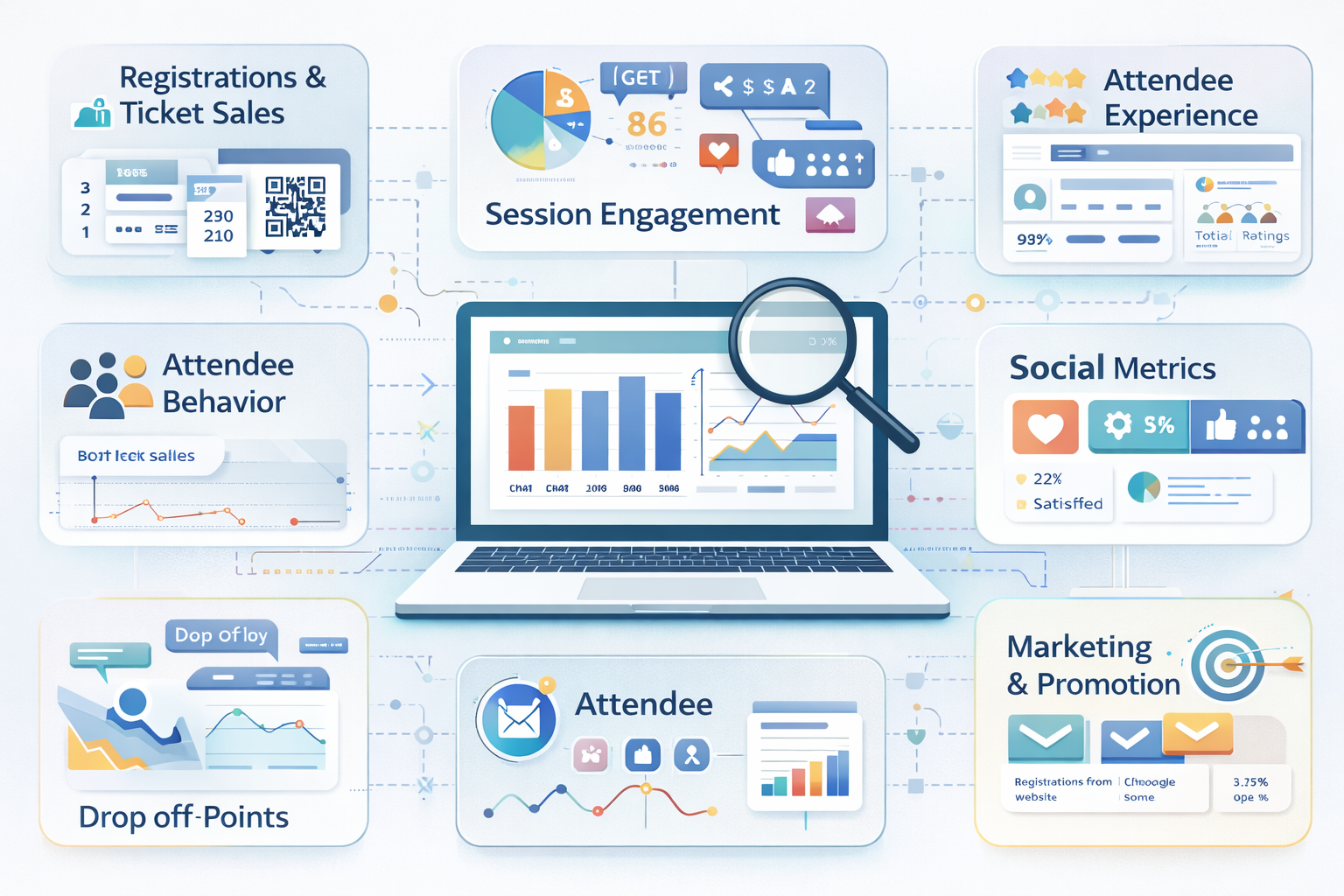
Understanding the key event metrics is the first thing that you need to do to create a data driven event. You need to closely monitor and analyze these metrics to improve your future events.
These metrics include the following:
1. Event attendance
Knowing how many people have registered or checked-in to your event gives you an accurate information about your event attendance, which is crucial to measure its success.
Consider the following areas to find out your event attendance:
- Detailed registration and ticket sales data.
- Number of event check-ins.
- Check-in and registration ratio.
- The number of people who did not attend even after registering
2. Engagement level
Measuring the engagement level tells a lot about your event performance because if attendees do not feel engaged with your event content, they will mostly not attend your future events.
Consider the following areas to measure your event engagement level:
- Chat conversations and queries.
- Participation in Q&A sessions.
- Number of people who attended event sessions virtually.
- Social media interactions through comments, shares or mentions.
- Active participation in games included in your events.
They also tell you how relevant your event content is to your attendees.
3. Attendee behavior
This metric is all about understanding how your attendees respond to your event content and its promotional materials.
Here are the things to consider:
- The part of a session where most people dropped off.
- The event sessions which managed to gather most event attendees.
- Number of content downloads.
- Event networking.
4. Marketing and promotion
Your marketing and promotion data shows people’s level of engagement with your marketing materials.
Here are the things to consider:
- Find out the sources of registrations.
- Examine the conversion rate of your event landing pages.
- Website’s click through rate.
- Email’s open rate.
- Participation in social media contests.
5. Attendee experience
Attendee experience is the heart of every event, which often determines its success. Offering a satisfactory attendee experience also increases the chances of attendee retention.
Here are the things to consider:
- Post event feedback.
- Overall event ratings and reviews.
- Speaker and session reviews and more.
There are various tools available in the market for WordPress users to smoothly run data driven events. We recommend WP Event Manager as it offers a comprehensive solution for all types of events.
Embrace data driven event planning with WP Event Manager
WP Event Manager offers a set of premium addons that cover various event management requirements. Starting from calendar, registration and ticket sales to promotion and networking, it offers detailed data and analytics into each segment of an event.
- The registration add-on offers a detailed dashboard for organizers to help them track the number of registrations confirmed, waiting, cancelled and left.
- Similarly the Sell tickets add on shows the number of tickets sold, not purchased or left.
- The CRM integrations of WP Event Manager allows you to track attendee data and sync them in real time automatically.
- The Ai matchmaking add-on also tell you about the level of networking in each of your events.
To know more about WP Event Manager and its addons, discover the plugin now!
The post Data-Driven Event Planning for Successful Events in 2026 appeared first on WP Event Manager.


0 Commentaires