Event organizers are constantly looking for new ways to drive attendee engagement and participation in their events. This is where the concept of event gamification comes in. It instantly turns boring interactions into exciting activities, challenges, and rewards, which not only break the ice for attendees but also give them networking opportunities in an event.
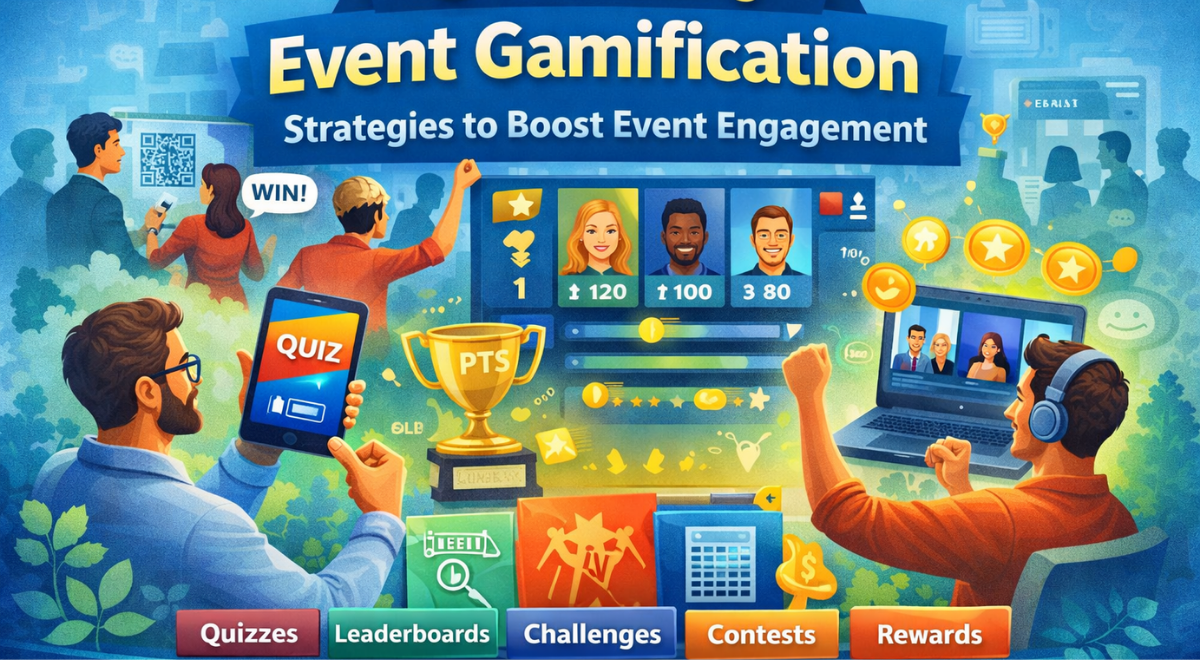
To utilize the power of event gamification, you must have the right strategies that will not only entertain but also encourage your attendees to participate actively. In this article, we will take you through 5 outstanding event gamification strategies that are sure to double up attendee engagement in your upcoming events. Before getting into the main topic, let us give you a brief introduction to the idea of event gamification.
What is event gamification?
Event gamification indicates the idea of incorporating games in your events to drive engagement and participation in your event. It adds a fun element to your events where attendees win rewards and enjoy the event thoroughly. Research says gamified events witness 48% more engagement than in the non-gamified ones.
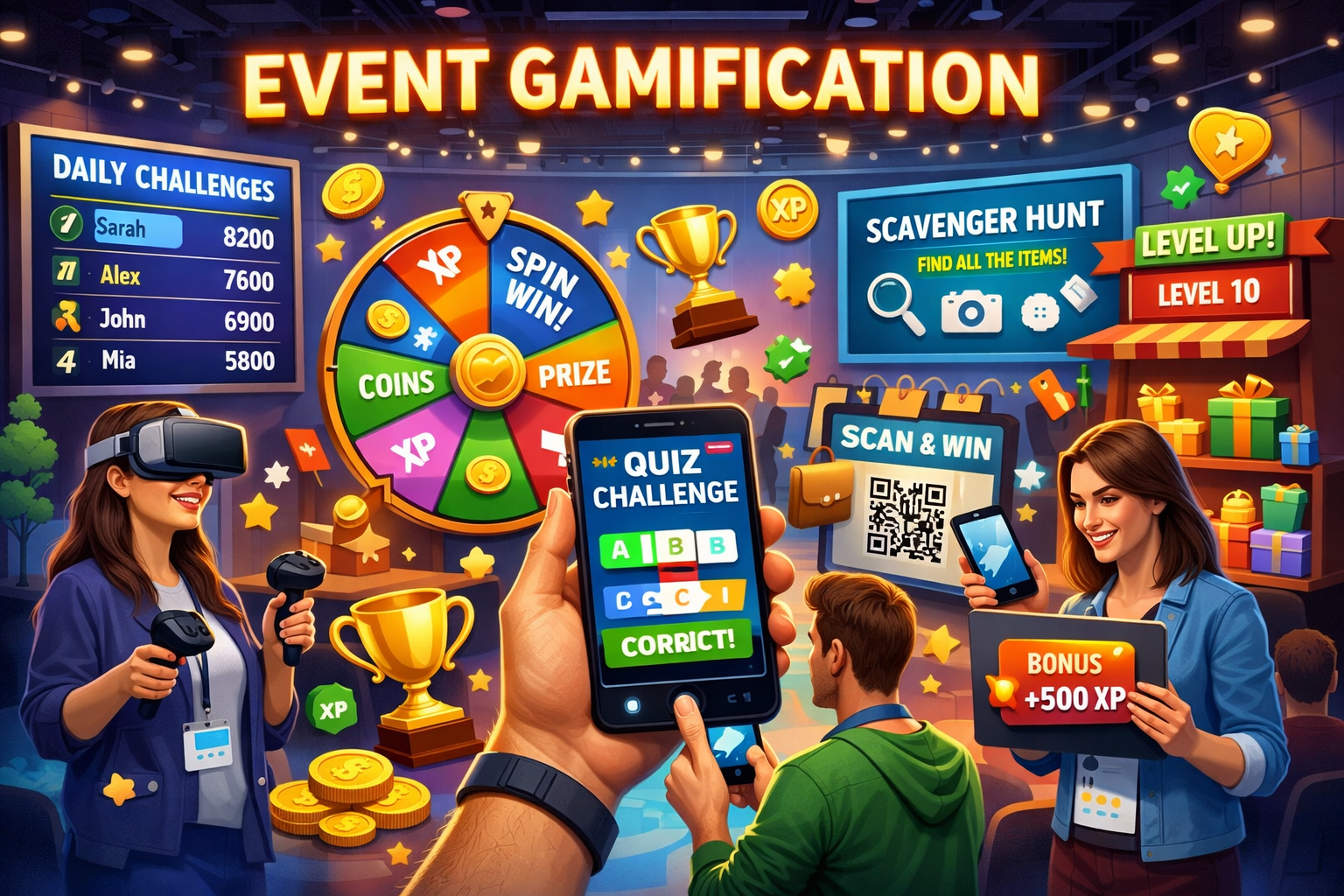
Key elements of event gamification include the following:
- Challenges: These are the games based on challenges.
- Points: They display the points that an attendee earns after participating in various activities in an event.
- Badges: They are a type of rewards that attendees receive by winning a game or completing a challenge.
- Performance tracking: Allows participants to track performance through visual markers.
- Leaderboards: It displays the top performing participants in your event.
Why event gamification matters
Embracing event gamification strategies to improve event engagement is not just an event industry trend; it brings a lot of advantages to your event. let us explore them.
- Increases attendee retention: When customer enjoy your event and actively participate, they are most likely to be interested in joining the upcoming ones as well.
- Boosts interaction: Event gamification allows attendees to interact freely by participating in various games and healthy competition.
- Improves attendee experience: Attendees engage with your events by participating in various games and activities which automatically improves user experience.
- Enhances sponsorship visibility: You can increase sponsors visibility by creating booth visit challenges and more such games.
Event gamification strategies to boost event engagement
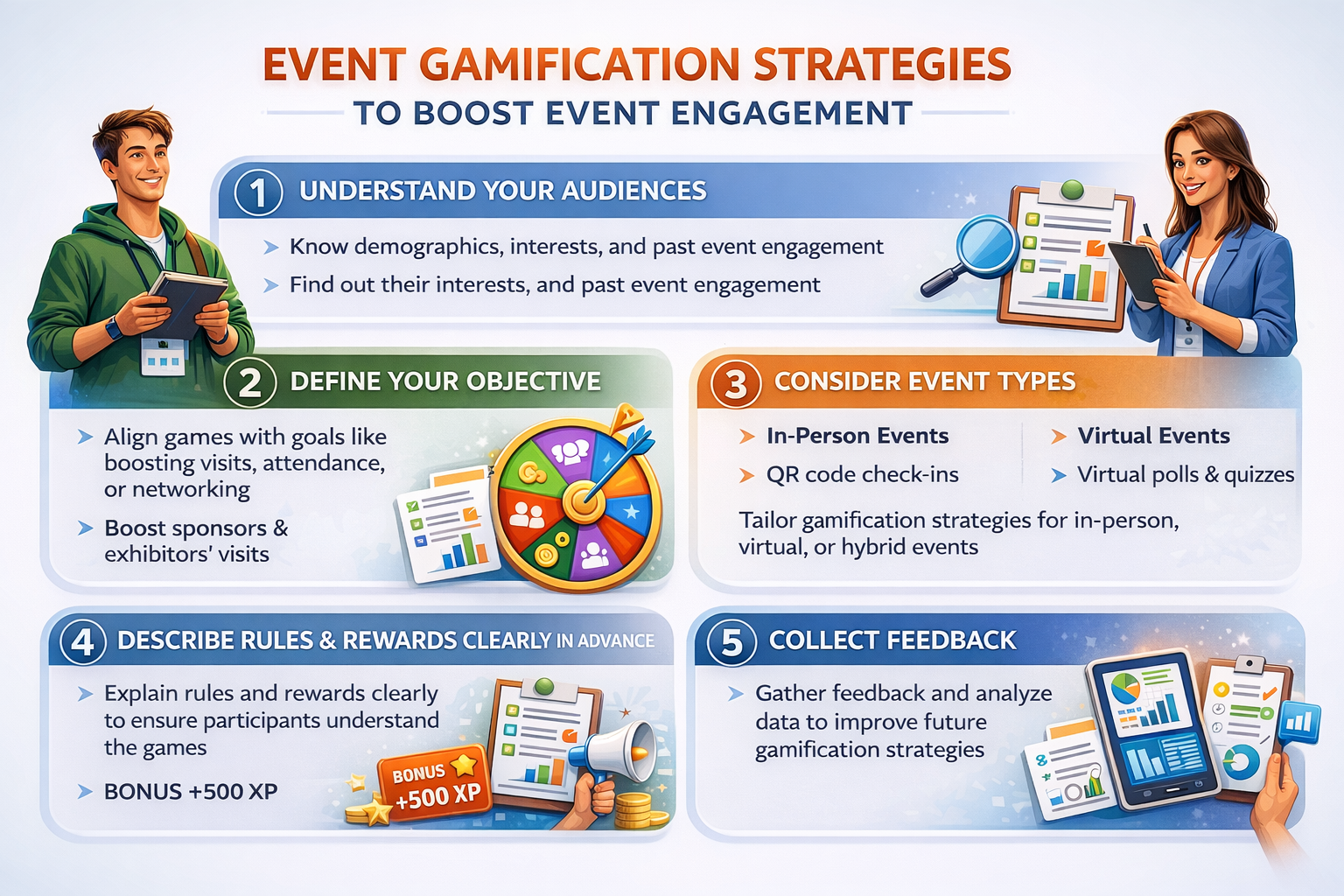
1. Understand your audiences
You need to be aware of your audiences’ choices and preferences to make sure that your event games are interesting to them. When you know about it, it becomes easier for you to deliver memorable experiences to them.
Collect the following information about your audiences to know about your target audiences:
- Check demographics including their age, professional background, level of experience etc.
- Find out their interests, and preferences.
- If any of them have attended your past event and how much they have engaged.
Based on the above mentioned data, you can offer your attendees a personalized gamification experience in your events. For example, if your event mostly attracts the young crowd, you can add fast-paced games. Similarly, for corporate crowds, learning-based games are mostly recommended.
2. Define your objective
Make sure that the games you create in your events perfectly align with your event objectives. Remember, you can only get your desired results from event gamification when you select games based on your event goals.
Consider the following things to determine your objective:
- Boost sponsors and exhibitors’ visits.
- Increase your event attendance
- Drive engagement and networking.
- Attendee retention.
As an event organizer, you must check and confirm if your event games can fulfill these goals. For instance, if learning is your event objective, include quizzes as event games.
3. Consider event types
In addition to your audience’s preferences and your event goals, you need to consider the type of event you are organizing as an event gamification strategy.
Consider the following things for in-person events:
- Allow QR based check-ins to encourage people to visit booths.
- Run live contests.
- Offer exclusive entry or giveaways as rewards.
For virtual events:
- Create polls, Q&A, quiz competition, etc to drive engagement.
- Interactive video sessions.
- Introduce a leaderboard that is updated in real time.
For hybrid events:
- Make sure to have a centralized platform for virtual and in-person attendees.
- Create games where both in-person and virtual attendees can participate.
- Similarly plan your rewards in a way that both types of attendees can utilize.
When it comes to choosing a platform that perfectly suits your virtual and in-person attendees, go for WP Event Manager, a WordPress event management plugin, developed to simplify event management online.
4. Describe rules and rewards clearly in advance
No matter how strong your event strategy is, if your audiences do not decode the game rules, then it would not work the way it should.
- Describe the games rules in detail.
- Communicate the rewards clearly by letting them know which actions would earn them rewards.
- What rewards are available for them.
Here are some tips to add clarity to your game rule descriptions:
- Keep the description short, clear and easily understandable.
- Dont forget to add examples to make it easy to understand better.
- Highlight your best performers through out the event.
- Update your leaderboards instantly to maintain transparency.
5. Collect feedback
Embracing event gamification is undoubtedly a good step to drive event engagement. However, if you don’t track its performance and attendees’ response to it, it will not be helpful for you. Taking attendee feedback and performance tracking is crucial to deliver better events in the future and determine if it is working for you.
Track your event gamification performance in the following ways:
- Rely on analytics to check the key performance metrics including participation level in games, time spent on them etc.
- Take feedback from each attendee to know about their experience in the games you added in your event.
- Collect and keep the data of your in-person and virtual event safely to improve your gamification strategies.
Wrapping up
Engagement is one of the most crucial parts of an event that influences its success. Event gamification contributes a lot to drive engagement and encourage attendees to keep coming back to you. Having strong event gamification strategies makes the journey easier for you. You need to know your audiences well, set clear event goals, introduce games that go well with your audiences, state game rules and rewards clearly, and track your event gamification performance by collecting attendee feedback and monitoring analytics. These strategies will help you fully utilize the benefits of event gamification.
The post 5 Outstanding Event Gamification Strategies to Boost Event Engagement appeared first on WP Event Manager.





0 Commentaires