The event industry is constantly exposed to new technical developments. Starting from the invention of event management plugins to artificial intelligence, these technologies have not only transformed the event management process but also attendee expectations.
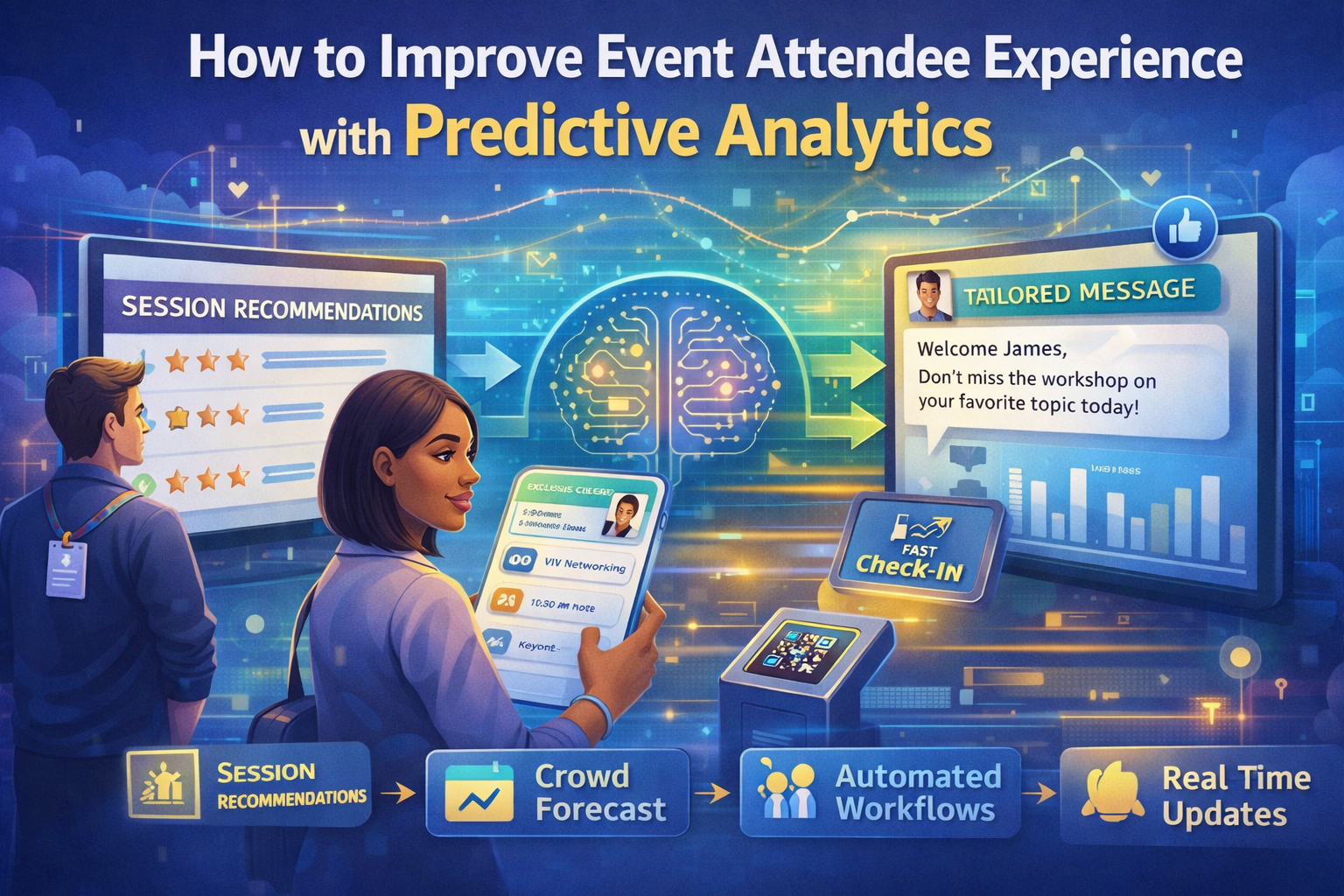
Having great event content with a professional setup is no longer enough to satisfy them. Today’s event attendees look for experience, personalization, and relevance. This is where the role of predictive analytics for events comes in.
Data-driven event planning is becoming the standard, where there is no room for assumptions or guesswork. Predictive analytics for events helps organizers understand the needs of their attendees. In simple terms, they predict what attendees look for in their events by analyzing their registration data, behavior, and engagement patterns in past events.
In this article, we have shared a detailed guide on predictive analytics and how to use it to improve attendee experience in an event. Let us give you a brief introduction to the concept.
What is predictive analytics for events?
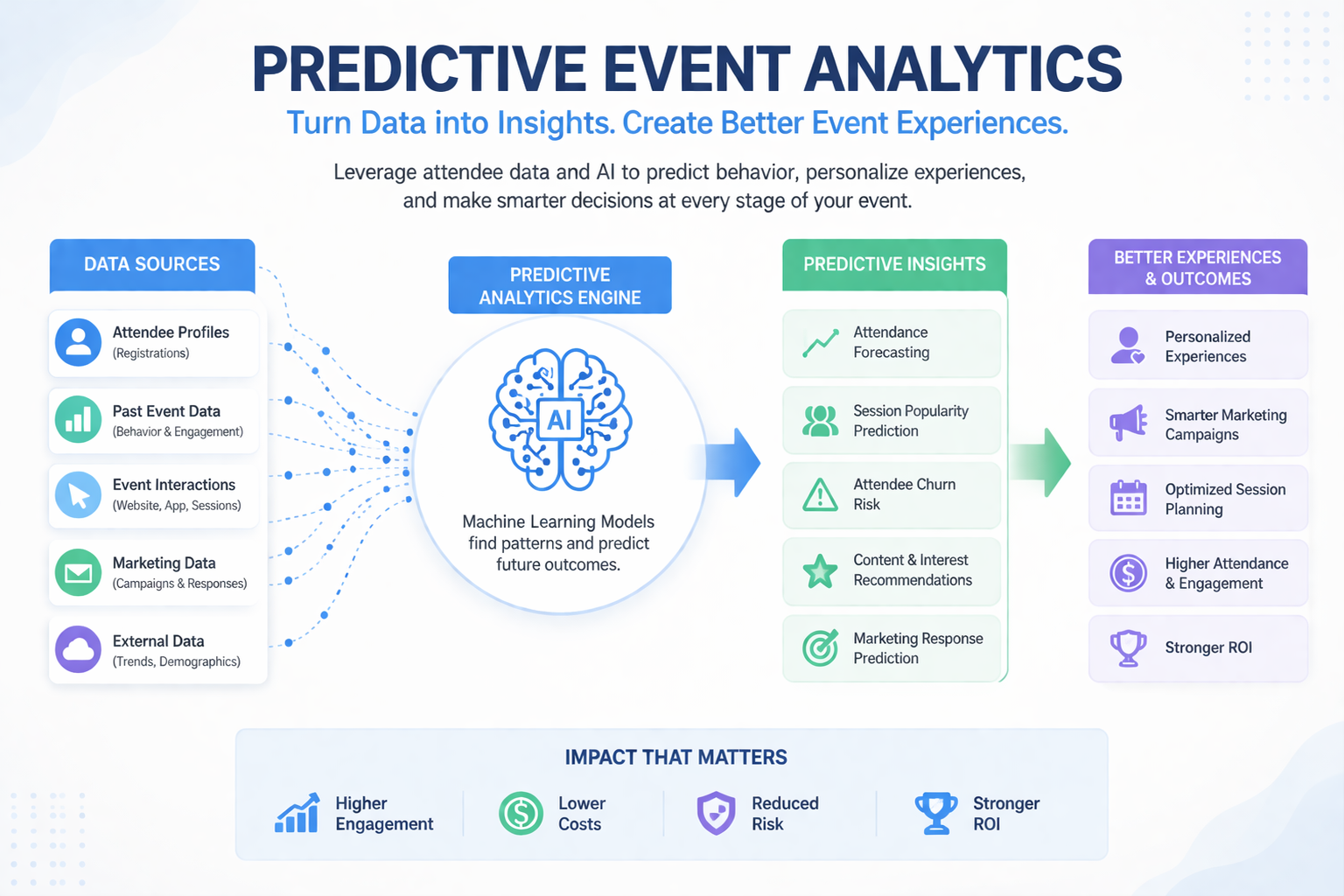
Predictive analytics is a method of using data, statistical modeling, and machine learning to predict future outcomes. When it comes to predictive event analytics, attendee data, their past event behavior, and engagement patterns are analyzed to predict their future event behavior, optimize marketing campaigns, and offer a personalized event experience.
An event planner can answer the following question using event data insights:
- Which attendees are most likely to attend or cancel?
- What type of marketing campaigns will be useful to reach the target audiences?
- Who are most likely to participate in your next events?
- What type of event content will be interesting for them?
For example: If your past event data shows that the networking session generated maximum engagement, you can arrange a bigger space and longer time slot for similar sessions in your upcoming event.
Now let us discover how predictive analytics works in the event industry.
Real-world application of predictive analytics for events
Utilizing predictive analytics in events is a data-driven approach that helps deliver personalized and satisfactory attendee experiences. Here are the real world applications of predictive analytics in events:
1. Smart audience segmentation
With predictive analytics, event organizers can categorize audiences into multiple groups to offer them personalized recommendations and customize marketing campaigns for each group. Audiences can be classified based on the analysis of their professional background, registration time, interests, or past event behavior.
2. Optimizing event sessions
With a detailed analysis of attendee registration and past event data, you will be able to predict which event session is going to attract the maximum number of attendees. This is also a part of predictive analytics that helps you plan the right -size spaces for your event sessions.
3. Personalized recommendations
Under the predictive event analytics, you can suggest event sessions to attendees based on their interests and preferences. This can be done by scrutinizing your attendee profiles or registration data, which will not only drive engagement but also improve the attendee experience by saving their time on browsing through all the sessions to select the preferred ones.
4. Better marketing campaigns
Gone are those days when advertisements or marketing campaigns were made based on assumptions. Event marketers nowadays only rely on data to find out the marketing channels that are most likely to get the best response, messages that audiences will relate to, and the right time to launch the campaign. This ultimately helps them boost registrations.
5. Attendance forecast
Having a clear idea of the expected number of attendees in each session allows event planners to utilize the space optimally and the resources available for the event. This reduces event expenses and also improves attendee experience in your events.
Data plays the lead role in using predictive event analytics. Now let us find out the things you need to incorporate predictive analytics to your events.
Things you need to use predictive analytics for your events
- Attendee data
The first and most important thing that you need for predictive analytics is attendee data. You can collect attendee data through a well-organized registration form, track attendee behavior on your website, and past event surveys. For a simple and strategy-driven registration form, you need feature-packed event management software. WP Event Manager can be an ideal choice for WordPress users.
Pro tip: To make the event registration process simple, use the Registration add-on from WP Event Manager that allows event organizers to create a customizable registration form using which they collect the information they want from the registrants.
- Right tools
Collecting essential data manually to incorporate predictive analytics to your event management system is laborious and time-consuming. That is why you need the right predictive analytics tools to automate and speed up the process. WP Event Manager has a set of marketing add-ons or CRM tools that help you capture crucial attendee data and manage them seamlessly. Such tools include Zoho CRM, Sendinblue, Hubspot CRM and more.
They sync attendee data that you collect through registration across all devices and automate your email marketing campaigns with customized messages.
- Data interpretation skills
Collecting attendee data through the right tools is not enough to enjoy the benefits of predictive analytics. Analyzing the data to understand attendee interests and behavioral patterns to create marketing campaigns that they could relate to and strategic event decisions is crucial.
When you have essential attendee data and the support of the right tools like WP Event Manager and interpretation skills, it will be easy for you to deliver an excellent attendee experience in your events using predictive analytics.
Wrapping up
The growing trend of data-driven event management clearly shows that the concept of predictive analytics is here to stay. We hope that the article will be helpful for those organizers who have not adopted the new technology or are still in a dilemma. An event management software like WP Event Manager is sure to make the process easy for you.
Besides offering a great attendee experience, predictive analytics also improves event ROI. Moreover, the ability to understand your audiences and their behavior helps strengthen your marketing campaigns and make strategic decisions.
The post How to Improve Event Attendee Experience with Predictive Analytics appeared first on WP Event Manager.


0 Commentaires